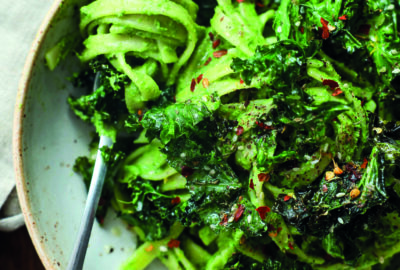
I’m not getting into the debate on the actual size of the UK & Irish coastline – let’s just agree there are thousands upon thousands of miles of it and we’re blessed to have it. Many of us already enjoy the jewels of our coastal arenas, whether that’s the fishing, walking, nature, swimming, sand-castling or sunbathing but there is one seaside gem that we all see but for the most part remains underused – seaweed.
The UK & Irish coastlines have a plentiful supply of seaweed with over 600 different types classified in three main groups – green, brown and red.
Green seaweed
Green seaweed is more plentiful in summer. Some of the most common include sea lettuce (Ulva Lactuca). The thin silk-like fronds resemble lettuce leaves which usually grow on a hard substratum. I like to powder these and combine it with sesame seeds to add texture to seashore picnics.
Brown seaweeds
The tough brown fibrous seaweeds are not related to land plants but come from a different evolutionary lineage that includes some fungi. These macro algae are very iodine rich and include Serrated wrack (Fucus serratus), which has flat fronds with a distinctive mid-rib and serrated edges. It dominates the lower shore of the British isles and turns green when cooked. I prefer to roast or pickle it.
Red seaweeds
There are over 350 red seaweeds in Britain. All seaweeds have green (chlorophyll) but the red seaweeds have blue, orange, red and brown pigments, which enable different wavelengths of light to be absorbed from the sea. One of my favourites is Pepper dulse (Osmundea pinnatifidia). The moist dark brown fronds grow in a tuft on rock faces. Cut the tiny fern shape off with scissors. It has the strongest taste of all the seaweeds. The taste is designed to keep fish predators at bay.
Cooking with Seaweed
When it comes to cooking, seaweed is one of the most versatile, functional, flavour enhancing and valuable ingredients you can find but its so underused. We need more chefs to take on the seaweed baton and experiment. It’s not that you can eat it, it’s HOW you can eat it. It’s all about the cooking.
Nature and foraging are very slow processes and seaweed reveals itself bit by bit – you have to be patient and put the time in. It’s a slow burn but all the time I’m discovering new dishes and ways of using it. The other day I had some brown seaweed stock leftover. I decided keep reducing this right down, using a similar process that I would for birch sap. I was left with an incredible soy sauce-like concoction that was delicious. Forget oyster, the world is your seaweed.
I started my seaweed adventure 15 years ago and back then all anyone said was boil it up with beans but seaweed is quite fibrous and you have to think about texture and colour when using it. Here are some of my favourite ways: Roasted, fried and deep fried
I love seaweed crispy and to melt on the tongue so that means I roast it or even batter it and deep fry it.
Powders
Powders are one of the modern approaches that have gained popularity. Cut the seaweed fresh and healthy, wash well to get rid of the sand, dehydrate to remove the moisture and blitz it up with some toasted sesame seeds and chilli. Delicious as a seasoning or flavour enhancer.
Powders are great for preserving and last a long time if well stored in the dry away from the light. I use the powder in pastries and biscuits as it’s brilliant with seeds and nuts for texture. It is intense and more like a flour, so you have to think about that in your approach.
To make a powder, which has an herbaceous, complex almost garlicky flavour, dry it in strong sunshine on your car dashboard, greenhouse, a low oven or dehydrator. Then simply rub it through a sieve to become a powder.
Flapjacks
Dulse is a red seaweed, full of iron, which I cook down and add to my flapjack mix. It provides a beautiful salty aspect that cuts through the sweetness. I’ve covered it in chocolate before as well.
Marmalade
Dulse can also be added to marmalade – just don’t overcook it. Snip it up and stir it in at the end.
Sauces
I make a lovely tomato sauce with the addition of dulse seaweed flakes. It complements the tomatoes wonderfully.
Risotto
A little fresh seaweed and seaweed stock is great for depth of flavour in a risotto.
Seaweed butter
Another super way of using seaweed is to infuse meats, fish and veg. Fish cooked in a pan with seaweed butter takes some beating.
Bread
I never make bread without a big load of fresh seaweed in it. I keep it frozen and I knead it into the dough. It oxygenates the bread, boosts the loaf’s mineral content and enhances flavour.
Drinks
You have to try a Bloody Mermaid. We infused vodka with a truffle seaweed called pepper dulse. We then use a spicy tomato sauce and pickled seaweed on top.
Foraging for Seaweed
There is no toxic seaweed, so you don’t have to worry about eating the wrong one and killing yourself. Make sure you research and visit clean beaches or coastal areas though.
Get yourself a tide table and go out at low tide about an hour before the tide comes in. Different seaweeds grow at different sea
levels so you can find a diverse selection. Take some scissors so you don’t have to yank it from the rocks and so you leave at least a third to keep growing.
If it looks older or has been nibbled by fish – leave it alone. You will have plenty to choose from. Look for the fresh, clean looking seaweed where the pigments are uniform in colour.
Simply take some samples of different types and colours as they all offer slightly varying flavour and nutrient profiles. Then it’s time to get them home and experiment in the kitchen.
Find out more
This article was contributed by Lucia Stuart from The Wild Kitchen in Kent. For more information about Lucia’s Seaweed Masterclass in May or numerous other foraging workshops, visit The Wild Kitchen. Telephone 07810317866 for bespoke excursions.