Research carried out by Linda McCartney Foods found that 73% of parents were likely to encourage their children to eat vegetarian meals at school as long as high-quality standards were maintained. In addition, over 28% would like their child to eat a meat-free meal at least twice a week.
So how can school caterers ramp up vegetarian and meat-free meals so they are not only nutritious but also attractive to students?
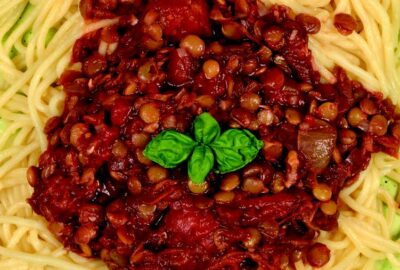
Veganuary, the annual global campaign which encourages people to try a vegan diet, takes place every January and presents the perfect opportunity for schools to get children engaged. “Be creative – plant foods are naturally colourful and vibrant so put these front and centre to make dishes more appealing,” advises Hannah Weller from Veganuary. “Train kitchen staff on a small number of new recipes rather than a whole new menu. Choosing familiar dishes firstsuch as a curry, pasta bake or bolognese and swapping the protein source is often easier to introduce and more likely to be well received. For example, swap mince in bolognese for lentils or diced mushrooms or swap chicken in curries for chickpeas.”
The names of plant-based dishes need to be appealing to students, so Hannah suggests emphasising different flavours and textures in the dish names. “Use words that evoke the senses such as crispy, spicy, juicy, creamy and smoky or use fun and playful names. Incorporate them into the main menu instead of having them on a separate one. Position them among the animal-based options so students don’t think they are separate or inferior to the meat dishes.”
Students can be tempted to try plant-based meals with taster pots, or by holding a tasting event. Sophia Millar from ProVeg UK, whose School Plates Programme trains caterers throughout the sector via workshops, says, “Invite children, parents and teachers to try new dishes together. Research shows children need repeated opportunities to try new foods before they accept them.”
The Vegetarian Society’s cookery school COOK also works with schools and councils teaching catering staff how to make plant-based food. Sam Linford-Platt, head of the cookery school, recommends taking inspiration from across the cultural spectrum. “Vegetarian and plant-based dishes can be some of the most inclusive options on the menu, often appealing across different cultural and religious groups and, depending on the recipe, helping to accommodate a range of dietary requirements too. The recipe for success is simple; serve food that tastes great, looks appealing and works for as many pupils as possible.”
Campaign support for schools
Doubling down on efforts to encourage more vegetarian meals in schools, Veg Power has introduced ‘Bang in Some Beans’ – a programme designed for children in primary and secondary education. Research shows that 86% of primary-aged children are not meeting their fibre target and beans are an excellent source. The campaign, which encourages schools and caterers to increase bean and fibre intake, is supported by celebrities such as Hugh Fearnley-Whittingstall, Chantelle Nicholson and Tom Aikens. This is part of a bigger campaign to increase the UK’s bean and pulse consumption, run in partnership with The Food Foundation and Beans is How, funded by the National Lottery Community Fund.
Dan Parker, chief executive, says, “We want children and their families to incorporate beans and pulses within their diets on a regular basis so they can benefit from all they have to offer. They are high in fibre, low in fat and a good source of protein. It’s important to highlight that they are an affordable source of protein and fibre. For this year’s campaign we wanted to change perceptions of beans and encourage them to be thought of as a good thing! Next year’s campaign is in the planning stages and will incorporate feedback from caterers and schools.”
Benefits for all
Plant-based food offers health benefits, but schools can benefit by saving money too. As Sophia points out, “Plant-based whole food ingredients are often more affordable than meat and dairy. Chickpeas are cheaper than chicken and lentils cost a fraction of the price of minced beef. One of the schools we worked with saved 20% on food costs by increasing their plant protein on the menu. For example, ingredients for plant-based spaghetti bolognese with lentils and soya mince cost 41p per portion compared to the traditional dish made with mince, costing an average 72p per portion.”
Encourage the uptake of more vegetarian meals with these tips:
- Be creative – put plant foods at the front to make dishes more appealing
- Train kitchen staff on a few new recipes rather than a whole menu
- Make the names of dishes more appealing
- Incorporate plant-based dishes in the main menu
- Give out taster pots or hold a tasting menu event
Education Catering News
Keep up to date with the latest news, advice and inspiration for caterers working across education in nurseries, schools, colleges and universities.