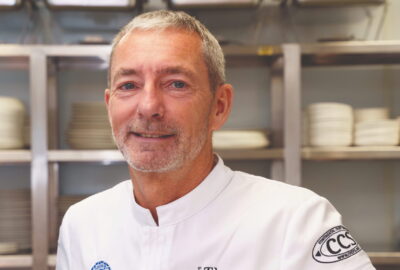
Fraser Cameron is head chef at 1610, the Michelin Guide-listed restaurant within The Globe Inn in Dumfries, a historic haunt of Robert Burns. A two-time Scottish Young Chef of the Year, he trained under Andrew Fairlie and has worked at leading Michelin-starred kitchens across the country. Fraser champions hyper-seasonal Scottish produce, drawing on local suppliers and the nearby Kitchen Garden. We asked Fraser to provide guidance for caterers across all sectors on how to effectively consider all the senses when creating dishes.
How to our senses shape how we experience food?
Every guest always eats with their eyes first, and that starts to shape their interpretation of how the dish tastes. Secondly, as each mouthful reaches their head, they get the aroma which again develops the guests’ thoughts on what they are eating. This can even go as far as how the food feels, for example: does the canapé leave residue on your fingers? What is the texture of the food? What is the temperature? The list could go on. To me, the best dishes are the ones that play on all the senses and allow the guest to be completely absorbed in the food.
How do flavour, texture & aroma guide your recipe development?
Everything must work together in harmony. Once I have a rough dish together, we taste it as a team and speak about what works well, does it look good? What can you taste? What can we improve? Sometimes we end up with a completely different dish than we first envisaged but ultimately, we create something that we love and think the guests will enjoy.
What techniques do you use?
Restraint would be the primary technique. I constantly question if elements bring anything to the dish, are they necessary? I enjoy experimenting, but the most important technique is tasting! We constantly taste every element, taste them together, taste them with our paired wine to make sure that what the guest receives in the dining room is the best that we can possibly offer them.
In busy catering environments, what practical steps help teams produce dishes that support scale?
Recipes and standard practices are a must. This allows you to consistently meet the standard and target set regardless of who is preparing the dishes.
Are there common mistakes that can be avoided?
It is very easy to dull flavour, texture and aroma. Something as simple as under or over seasoning could drastically alter the flavour, under or over cooking could alter the texture, food that is slightly past its peak or out of season may lose its natural aromas.
How can chefs help reconnect residents with past experiences and encourage those with reduced appretites to eat?
I see cooking and hospitality as a form of art and entertainment. The main objective is for the guest to enjoy their experience and forget about the daily worries of life, even just for an hour. I love to listen to stories of food that people have eaten, from the best street food all the way to their granny’s Lemon Loaf that they had on a Friday after school. If you can take these stories and turn them into a dish, you are creating something more than just dinner, you create a connection with your guests.
More advice and inspiration
Find more advice and inspiration around foodservice trends and menu inspiration.