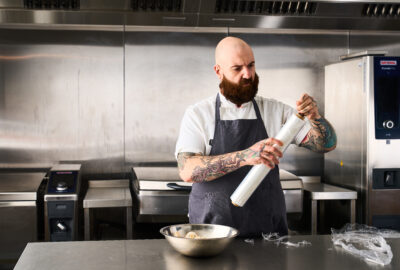
Former chair of the Craft Guild of Chefs, Chris Basten, Commercial Development Chef, Capital City College, has guided many a student on their hospitality career path. From teaching at Westminster Kingsway College, to mentoring budding young chefs participating in national competitions, his passion for the industry seems to be unending. It is therefore unsurprising that when we wanted to shine a light on how to level-up skills in the kitchen, we naturally turned to him for advice.
In your experience, what’s the single most overlooked skill that separates a good chef from a great one and why?
A good chef can always cook with flair and imagination and can turn ingredients into good and well executed dishes; a great chef can turn ingredients into technically creative and showstopping dishes with elevated flavours using a range of tried and tested methods.
What techniques do you think chefs in the UK should be paying more attention to right now and what new cooking techniques or skills are you seeing more of in hospitality?
Chefs in the UK would benefit from concentrating where possible on zero waste cooking, and creative usage of trimmings into stocks sauces and garnishes. This is very much appreciated by eco-conscious diners. Fermentation and preservation, the ability to make our food last longer so we are less reliant on importing foodstuffs from overseas is important.
What core principles or habits should junior chefs instill early on?
Junior chefs should focus on building strong fundamentals: discipline, consistency, respect for ingredients, and a willingness to learn. These habits will form the start of a successful culinary career and separate those who simply cook as a job, into those who grow into kitchen and restaurant leaders.
What advice would you give to chefs who want to push their craft further are there any accessible educational institutes you would recommend?
Never stop learning, even seasoned chefs benefit from refresher courses in fundamentals like sauces, butchery, and pastry. Travel through food – Explore cuisines outside your comfort zone; global influences are shaping modern dining. Take advice from a mentor, working under a master chef, or joining professional networks accelerates growth.
Many chefs talk about “developing their palate.” How do you train your own palate and keep it sharp?
Focus on the five basic tastes (sweet, sour, salty, bitter, umami). Ask yourself: What’s dominant? What’s missing? How do the flavours evolve? Chefs often taste components separately before combining them.
Undertake blind tasting exercises, cover labels or have someone prepare small samples of spices, herbs, wines, or sauces. Identifying them without visual cues strengthens memory and sensory recall. Smell is a huge part of taste. Practise identifying aromas in spices, teas, wines, or even fresh herbs.
What do you think deserves a bigger place in professional kitchens?
Beyond fermentation, curing, and ageing, traditional methods like smoking, drying, dehydration, pickling, and confit, deserve a bigger place in professional kitchens. These techniques not only preserve food but also unlock unique flavours, textures, and sustainable practices that modern diners increasingly value. They can also help with heritage-driven dining trends.
Supporting Success in Education Catering
Get the latest School and Education Catering News, along with helpful tips to support positive behaviour and student achievement