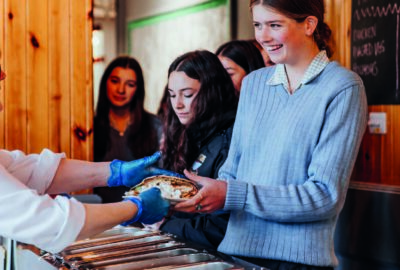
Mealtimes at boarding schools are not only about food, but also about creating an environment where students feel welcome. Students who board rely on catering teams to provide breakfast, lunch and supper seven days a week. This means that menu planning requires careful thought, flexibility and creativity. We spoke with boarding schools across the UK and Ireland to learn
more about how catering teams are rising to the challenge.
A WORLD OF FLAVOUR AT GORDONSTOUN
As Gordonstoun is an international school, menu planning can be complex as pupils come from different cultural and
religious backgrounds with their own dietary requirements, preferences and expectations. Ross Burgess is head chef at Gordonstoun School in Moray, Scotland which has 480 pupils, mainly boarders, who come from a wide range of countries.
“Our role goes far beyond simply providing meals. It’s about creating food that is nutritious and balanced, while also being
exciting, varied and something students genuinely look forward to. Having travelled extensively, I draw inspiration from cuisines
around the world. That helps us create dishes that offer a sense of familiarity and comfort to pupils who may be a long way from home.” The biggest challenge is managing rising food costs as prices can change quickly. “We see these challenges as opportunities to be creative. Working closely with suppliers allows us to explore different cuts of meat, alternative fish species and seasonal produce that may be less commonly used,” he says. Gordonstoun operates on a three-week menu cycle, which is constantly evolving. New dishes are introduced at the start of each term and by the end of the academic year the menu has often been completely refreshed. Popular dishes include Asian soups such as Tom Yum and Pho. Another firm favourite is a Hawaiian Poke Bowl. “We typically use around 50 sides of salmon when it’s on the menu,” he says.
Leiths Education cookery courses,
The school is the only one in Scotland to offer Leiths Education cookery courses, which are delivered by Ross and the catering manager. “Over the past two years we’ve been amazed by the enthusiasm shown by our students. This has sparked exciting conversations with the school and governing board about creating a dedicated teaching kitchen. Encouraging the next generation of chefs and hospitality professionals is something I care deeply about, and I believe this initiative could make a genuine difference in the years ahead,” he says.
Pupils have their say at Harrogate Ladies’ College
Moving further south to Yorkshire, Harrogate Ladies’ College, which has 60 boarders, regularly holds themed food events to introduce pupils to new cuisines. These include menus highlighting Diwali, Thanksgiving, the Lunar New Year and the catering team pull out all the stops for Christmas dinner. They have dressed up as Willy Wonka and the Oompa Loompas as well as The Grinch. Joanna Fox, principal, says, “These events bring variety to the dining experience and help foster a love of food among students.” Themed tasting tables are another way the school introduces students to different types of food. Joanna says, “They are a big success as they enable students to try new foods in a fun and engaging way. The World Oceans Day table featured tasters such as Mackerel Pâté Crostini and Grilled Sardine Fillet with Tomato Sauce.” Menus are changed every week with boarding students choosing their own menus at weekends. Sample dishes include Smokey Beef and Puy Lentil Chilli, Crispy Panko Breaded Chicken Burger and Cranberry and Vegetable Seeded Roast. ‘Build your own’ options such as salad bars, burrito bowls, pasta bars and sandwich stations continue to be popular. Harrogate Ladies’ College is the only independent school in Yorkshire to have achieved the Soil Association’s Food for Life Catering Mark. Joanna attributes this success to “our talented team of skilled chefs – around 90% of produce is sourced locally. We are also a Fairtrade Fair Achiever School promoting ethical sourcing.” Students’ feedback plays a key part in shaping the menu. Each term Food Committee meetings are held where pupils can give their opinion on the meals they’ve enjoyed and submit ideas. “We respond to pupils with a ‘You Said, We Did’ poster showing what actions the catering team has taken to pupil feedback,” she says.
Bringing everyone together at Villiers School
At Villiers School in Limerick, Ireland, catering is an important part of creating a family-like environment for boarding students. Susan Pena from the school says, “The dining hall is much more than a place to eat. It is one of the most important social spaces within the boarding community. Students from every corner of the world sit together, share experiences, discover new cultures and
build friendships over shared meals. It is often around the dining table that some of the strongest connections within boarding are formed.” As the only authorised IB World School in Ireland offering the International Baccalaureate, it attracts students from over 50 countries. This means the catering team has to accommodate a variety of cultures, traditions and food preferences.
Susan says, “The role of the catering team extends well beyond cooking. They build relationships with students, become familiar with individual dietary needs and help create a warm atmosphere.”Menus, which follow a four-week menu cycle, are carefully planned in accordance with student feedback. This comes from monthly meetings between Orla Bolger, the catering manager and the Food Council, made up of boarders from each year group. Some dishes remain firm favourites regardless of nationality such as homemade curries, beefburgers and homemade “spice bags”.The skill, imagination and genuine care given to every service by catering teams in boarding schools across the UK and Ireland is inspirational. Their efforts help make school feel like home, giving pupils food to enjoy and a warm welcome at the table, wherever in the world they have come from.
Education Catering News
Keep up to date with the latest news, advice and inspiration for caterers working across education in nurseries, schools, colleges and universities.